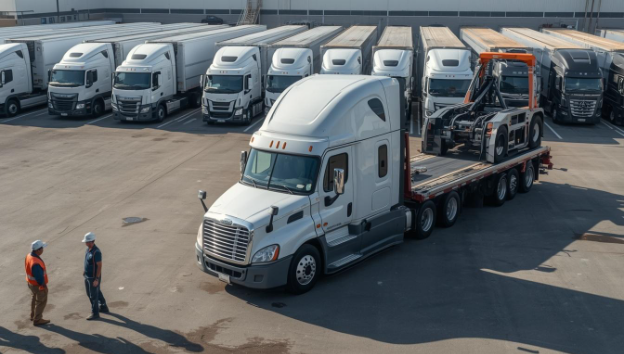
Day cab trucks are a common sight on highways and city routes throughout Eastern Washington and Northern Idaho. Built without a sleeper compartment, these vehicles are designed for shorter regional hauls where drivers return home at the end of each shift. They’re efficient, practical, and widely used across freight, construction, delivery, and municipal operations.
When a day cab breaks down, though, the situation calls for more than a standard tow truck. Getting these vehicles recovered safely requires the right equipment, the right expertise, and a towing partner who understands commercial fleet towing.
What Is a Day Cab Truck?
A day cab is a semi-truck cab designed for short to medium-distance routes. Without a sleeper berth, day cabs are lighter than their long-haul counterparts, but they still carry substantial weight and require heavy-duty towing when something goes wrong. They’re commonly used by freight companies, construction crews, delivery services, and government fleets.
When Does a Day Cab Need Towing?
Breakdowns happen across a range of situations, many of them unexpected. Common reasons a day cab may need heavy-duty roadside assistance or a tow include:
- Engine failure or overheating
- Transmission problems
- Brake system issues
- Electrical failures
- Tire blowouts
- Collision damage or accident recovery
Each of these situations carries different risks to the vehicle and surrounding traffic, which is why a professional response matters.
How the Day Cab Towing Process Works
When a fleet manager or driver calls for help, the dispatch team gathers key information: vehicle location, truck weight, load status, and the nature of the breakdown. That information determines which equipment gets sent.
From there, the process typically follows these steps:
- Dispatch selects the right tow unit based on the vehicle’s weight class and condition
- The operator arrives on scene and assesses the situation before any equipment is rigged
- Proper towing rigging is applied to protect the vehicle’s drivetrain, frame, and axles
- The truck is safely transported to a designated repair facility or fleet yard
For fleets managing multiple trucks at once, this can also involve decking and undecking to consolidate transport and cut down on downtime. Experienced operators take care to avoid secondary damage during the recovery, which can save fleet owners significant repair costs down the line.
Why Specialized Equipment Makes a Difference
Day cabs are not light vehicles. Without the right tow truck, recovery attempts can cause frame damage, brake system complications, or drivetrain issues. Heavy-duty towing equipment is designed to handle the load ratings and towing configurations these trucks require. If you’re weighing the difference, our breakdown of heavy-duty vs. standard towing walks through what separates the two.
For fleets operating around Spokane, Washington or Coeur d’Alene, Idaho, response time also plays a major role in minimizing downtime and keeping operations on schedule.
What to Look for in a Commercial Towing Partner
Not every towing company is equipped to handle commercial fleet vehicles. When evaluating providers, look for:
- 24/7 availability
- Heavy-duty towing and recovery equipment
- Operators experienced with commercial vehicles
- Transparent, upfront pricing
- Fast dispatch and response times
Plan Ahead Before the Next Breakdown
Understanding how day cab towing works helps fleet managers make faster, smarter decisions when a breakdown occurs. Having a trusted towing partner already in place means less scrambling and less downtime when it matters most.
Reliable Towing has been serving commercial fleets across Spokane, Spokane Valley, Coeur d’Alene, Hayden, and the broader Northern Idaho and Eastern Washington region since 2009. To learn more or request assistance, visit our contact page.