For commercial truck drivers and everyday motorists alike, Interstate 80 through southeastern Wyoming presents one of the region’s most demanding stretches of highway. Long uphill grades, changing weather conditions, and heavy freight traffic all place additional stress on vehicles, particularly during the Granite Climb between Cheyenne and Laramie.
Whether you’re hauling a fully loaded tractor-trailer or towing a recreational trailer, understanding how steep grades affect your vehicle can help reduce the risk of breakdowns and keep you moving safely.
Why Uphill Climbs Are Hard on Vehicles
Long grades force engines, transmissions, brakes, and cooling systems to work much harder than they do during normal highway driving.
As your vehicle climbs, it experiences:
- Higher engine temperatures
- Increased transmission strain
- Greater fuel consumption
- Additional cooling system demands
- More stress on tires and driveline components
For commercial trucks carrying heavy loads, these conditions can quickly expose existing mechanical issues that may not have been noticeable on level roads.
According to the Federal Motor Carrier Safety Administration (FMCSA), regular vehicle inspections and preventative maintenance play a critical role in reducing roadside breakdowns and improving highway safety.
Keep an Eye on Engine Temperature
One of the most common problems drivers encounter during long climbs is overheating.
As the engine works harder, coolant temperatures naturally rise. If the cooling system isn’t functioning properly, temperatures can climb rapidly.
Before traveling through mountainous terrain, inspect:
- Coolant levels
- Radiator hoses
- Fan belts
- Radiator fins
- Cooling fans
If your temperature gauge begins climbing unexpectedly, reducing engine load and pulling over safely before overheating occurs can help prevent serious engine damage.
Watch Your Transmission
Your transmission works just as hard as your engine during steep climbs.
Frequent gear changes, heavy loads, and extended uphill driving create additional heat that can shorten transmission life if maintenance has been neglected.
Drivers should:
- Monitor transmission temperature when equipped.
- Use appropriate gears during climbs.
- Avoid unnecessary acceleration.
- Follow recommended service intervals.
Proper transmission maintenance helps improve reliability on demanding routes like I-80.
Tires Matter More Than You Think
Tires generate significant heat during extended climbs.
Before beginning your trip, check:
- Tire pressure
- Tread depth
- Visible damage
- Uneven wear
Underinflated or damaged tires are more likely to fail under heavy loads and elevated temperatures.
The National Highway Traffic Safety Administration (NHTSA) recommends checking tire pressure regularly, especially before long-distance travel and heavy hauling.
Don’t Ignore Warning Signs
Minor vehicle problems often become major breakdowns during long grades.
Watch for:
- Loss of engine power
- Rising temperature gauges
- Burning odors
- Warning lights
- Unusual vibrations
- Fluid leaks
Addressing these issues early may prevent expensive roadside repairs and reduce the likelihood of becoming stranded.
What If a Breakdown Happens?
Even well-maintained vehicles can experience unexpected mechanical failures.
If your vehicle breaks down on I-80:
- Pull completely off the roadway if possible.
- Turn on your hazard lights immediately.
- Set reflective warning triangles if safe to do so.
- Stay inside the vehicle when conditions make it unsafe to exit.
- Contact a professional towing company.
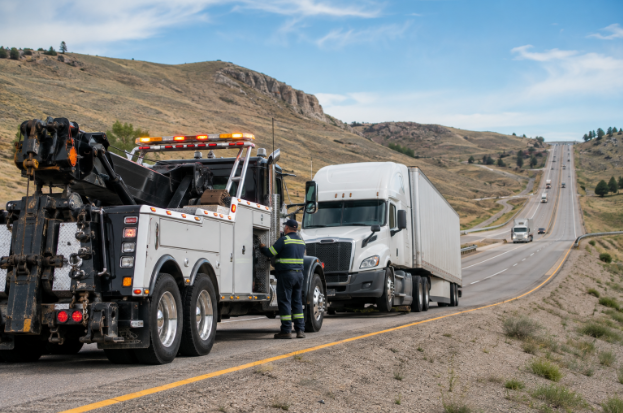
For commercial vehicles, experienced heavy-duty towing providers have the equipment necessary to recover tractor-trailers, buses, motorhomes, and oversized equipment safely.
If an accident results in cargo shifting, professional load shifts & transfer services can stabilize and transfer freight before towing begins, reducing additional damage and helping drivers return to service more efficiently.
Trust the Professionals When the Unexpected Happens
Mechanical failures don’t always happen at convenient times or locations. Whether you’re driving through Cheyenne, Laramie, Pine Bluffs, or anywhere along Interstate 80, having a dependable towing company already in mind can make a stressful situation much easier.
Winkler Brothers Towing & Recovery provides professional towing services, heavy-duty towing, accident towing, accident recovery, and load shifts & transfer throughout southeastern Wyoming. From commercial trucks and heavy equipment to passenger vehicles, our experienced team is prepared to respond quickly with the specialized equipment needed to get you safely back on the road.
Be Prepared Before You Reach the Summit
The Granite Climb demands more from your vehicle than most highways. A little preventative maintenance before your trip can help reduce the risk of costly breakdowns and keep your journey moving safely.
If your vehicle experiences trouble on I-80, don’t face it alone. Contact Winkler Brothers Towing & Recovery online or call 307-920-0968 for fast, dependable towing and recovery services. Whether you need Heavy-Duty Towing, Accident Recovery, or Load Shifts & Transfer, our experienced team is ready to respond when you need us most.